
Buying Glass-Scrim-Reinforced Composite Base Mat for Membrane Production
For composite base mat, buy the stated construction—not an anonymous roll with a familiar weight. Confirm the glass scrim, nonwoven combination and corresponding grade before comparing price or loading quantities.
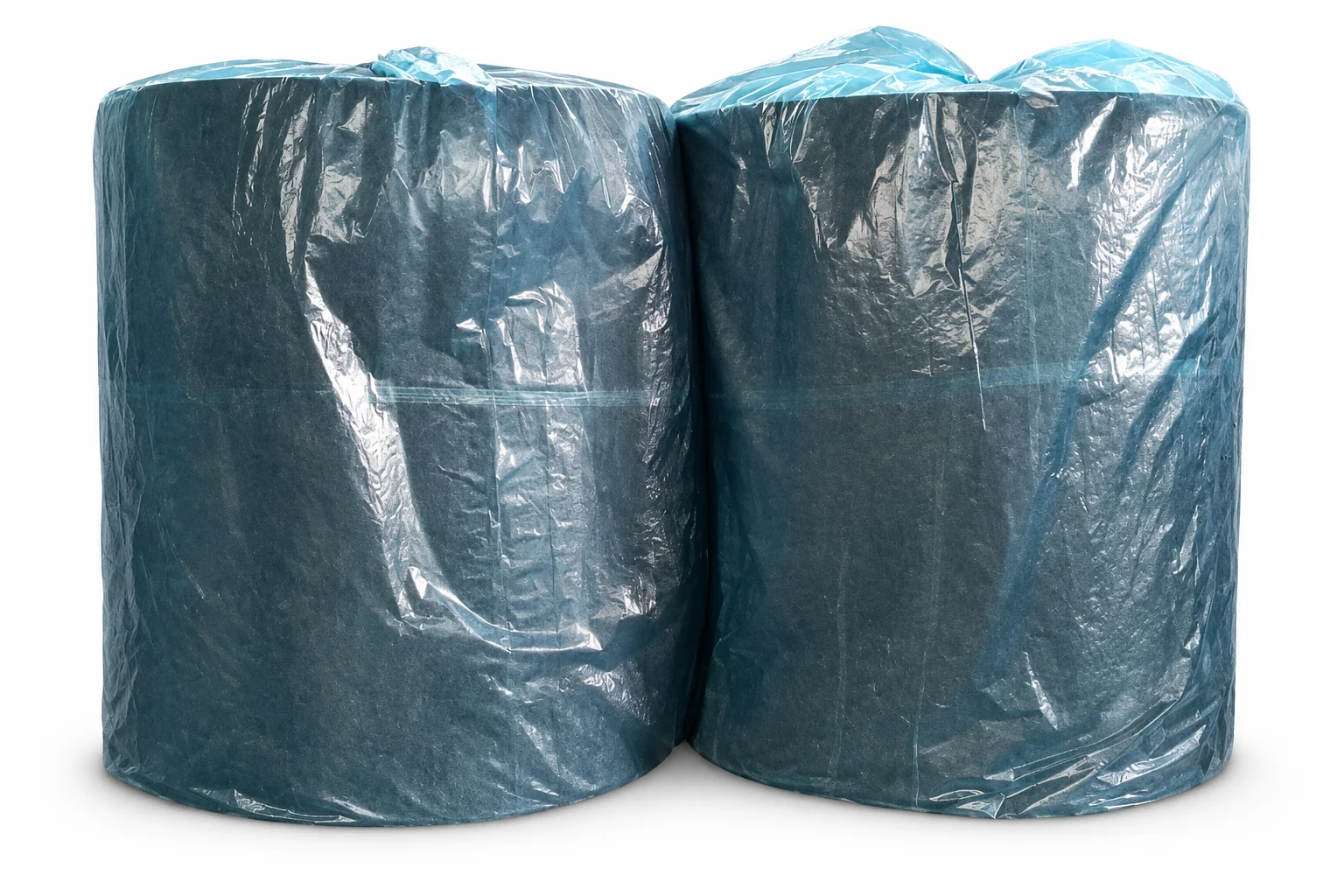
Identify the actual composite
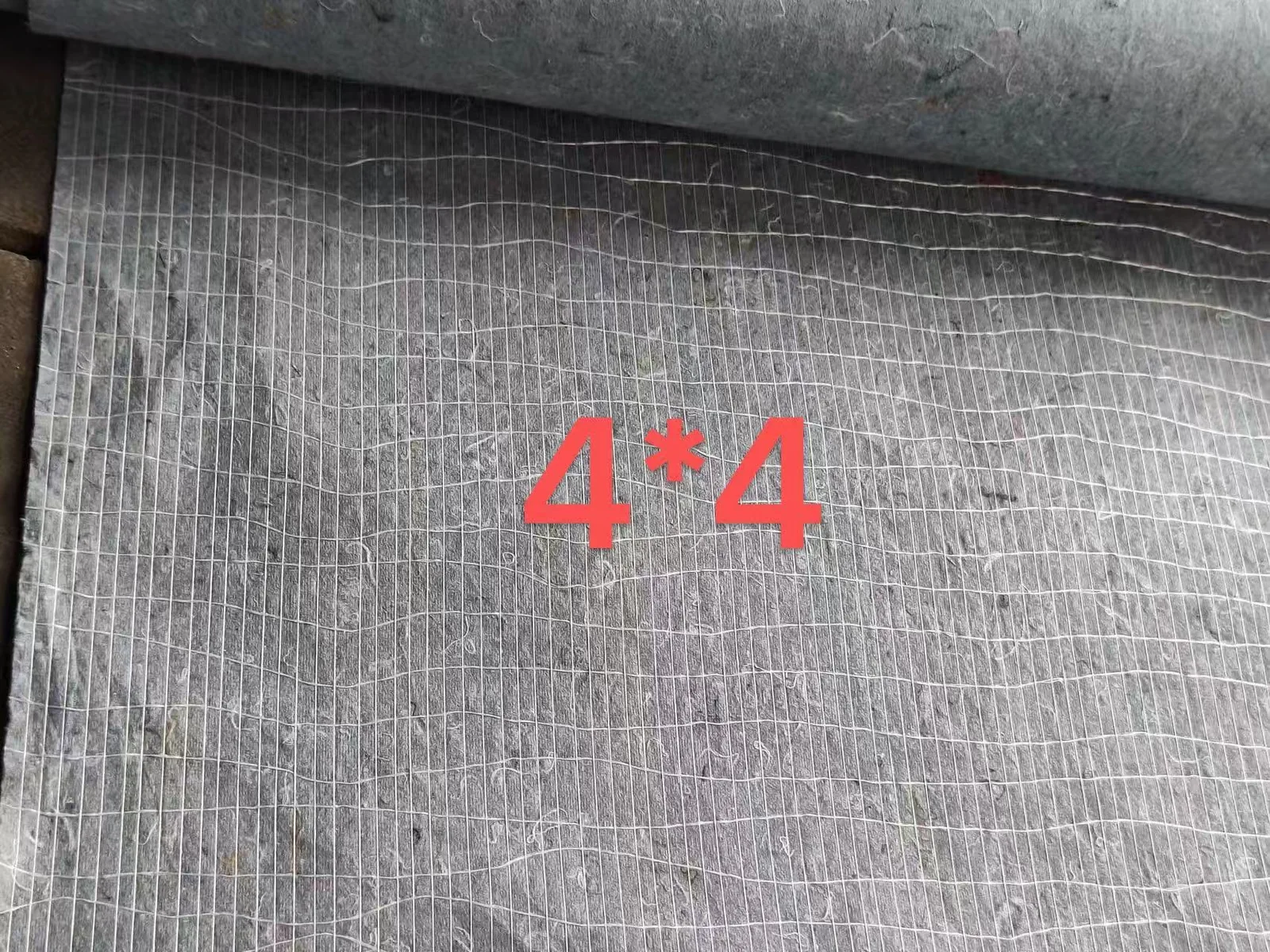
Merily’s composite base mat is described as glass scrim bonded with nonwoven. It is reinforcement raw material for membrane manufacturing. Keep that construction visible in the inquiry so it is not confused with continuous-filament polyester reinforcement, plain film or finished roofing felt.
Send the current specification and a clear opened sample view if you are matching an existing product. A wrapped-roll image identifies the delivery unit, but the reinforcement structure needs its own description. Confirm what is included in the quoted grade rather than relying on the appearance of a white or grey roll.
Read each model as its own grade
The listed standard models are 4×4, 5×5, 6×6 and 7×7. The listed Leno models are 7×7, 8×8 and 9×9. In the published table these correspond to 90, 100, 110, 120, 130, 140 and 180 g/m² respectively.
The two 7×7 entries are not a reason to merge columns: one is listed as the standard construction and the other as Leno. Preserve that distinction with the corresponding weight and technical requirements. If the naming convention or measurement unit needs clarification for an order, request it explicitly.
Composite order identity
On a phone, swipe the table sideways to see every column.
| Specify | Keep clear |
|---|---|
| Material | Glass scrim bonded with nonwoven |
| Model | Standard or Leno construction identified |
| Grade | Corresponding basis weight and technical column |
| Properties | MD/TD values and agreed test basis |
| Roll | Width, length, core and handling requirements |
| Shipment | Actual packing, net/gross weight and destination |
Compare the relevant properties together
The composite table includes mass variation, directional tensile force, elongation, tear, water resistance and moisture content. These belong to the stated composite columns. Do not replace them with the polyester table simply because the materials are both used in bituminous membranes.
For example, the standard 4×4 column is associated with 90 g/m² and tensile force of 300 N/50 mm MD and 150 N/50 mm TD. The standard 5×5 column is 100 g/m² with 400 and 200 N/50 mm respectively. This is a grade-specific technical comparison, not a future-lot test report.
Finish with a practical supply specification
Agree width, length, core and packing for the selected order. Composite rolls should not automatically inherit the fixed length or loading pattern stated for a polyester grade. Ask for actual roll mass and packed dimensions before freight is calculated.
Send Merily the construction reference, grade, required properties, width, quantity and destination. We can prepare a material-and-packing quotation that keeps the composite structure identifiable from the sample discussion to the delivery documents.
Questions for This Purchase
Is composite base mat the same as polyester reinforcement?
No. They have separate material structures and technical tables.
Are standard 7×7 and Leno 7×7 the same entry?
No. Keep the construction description and corresponding grade together.
Can I use polyester roll-loading figures for composite material?
Do not assume the same format. Confirm the actual composite roll and packing arrangement.
Send your specification.
Get a clear material quote.
Tell us what you produce, the material you need and your required roll format. Include the quantity and destination port so we can prepare the product and packing details together.
Useful details: thickness or basis weight, width, roll length or weight, core, quantity and application. For release film, add coated side and release requirements.
Standard production: approximately 10 days for one 40-ft container order. Customized specifications: approximately 10–15 days. Confirm the schedule with the final order.