
Select Polyester Reinforcement Basis Weight Without Losing the Rest of the Specification
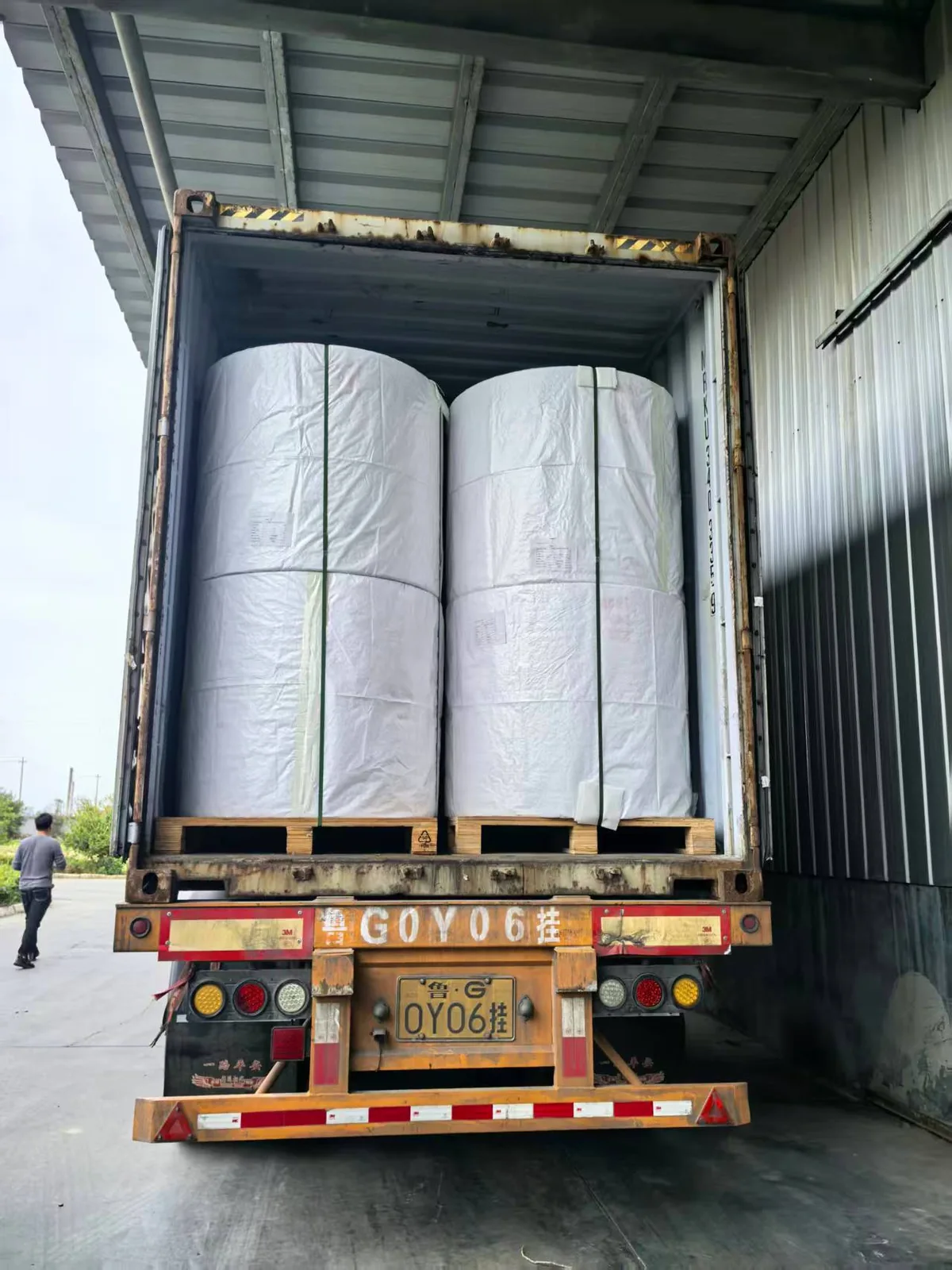
Choose the basis weight alongside the mechanical requirements and roll plan. A heavier polyester mat is not automatically the right purchase for every membrane; the useful choice is the grade that meets your specified construction and production needs.
Define the duty first
Start with the membrane you manufacture and the reinforcement requirement already used by your design or production team. If you are changing a grade, state why: a required property, a different supply format or a controlled material evaluation. Do not make the weight number stand in for the whole engineering requirement.
Merily’s continuous-filament polyester range includes 120, 140, 160, 180, 200, 220, 240, 250, 260, 280 and 300 g/m². The offered range gives purchasing options; it does not mean every grade has the same properties or can be substituted without evaluation.
Compare the correct technical columns
The current published table has columns for 120, 140, 160, 180, 200 and 250 g/m². For 180 g/m², tensile requirements are 600 N/50 mm MD and 500 N/50 mm TD; for 200 g/m² they are 650 and 550 N/50 mm. Keep these linked to their own grade columns.
Also review elongation, tear and dimensional requirements rather than selecting only by tensile force. The published table is a set of technical requirements. It is not evidence that a heavier grade automatically gives an approved finished membrane in your construction.
Keep these choices together
On a phone, swipe the table sideways to see every column.
| Decision | Confirm before order |
|---|---|
| Basis weight | Selected grade, not just the available range |
| Performance | Relevant grade column and required tests |
| Width | Actual 1010/1020 mm or agreed order |
| Roll mass | Calculate with actual width and length |
| Handling | Core, diameter and weight limit |
| Packing | Actual roll count, net and gross weight |
Turn basis weight into a material-mass estimate
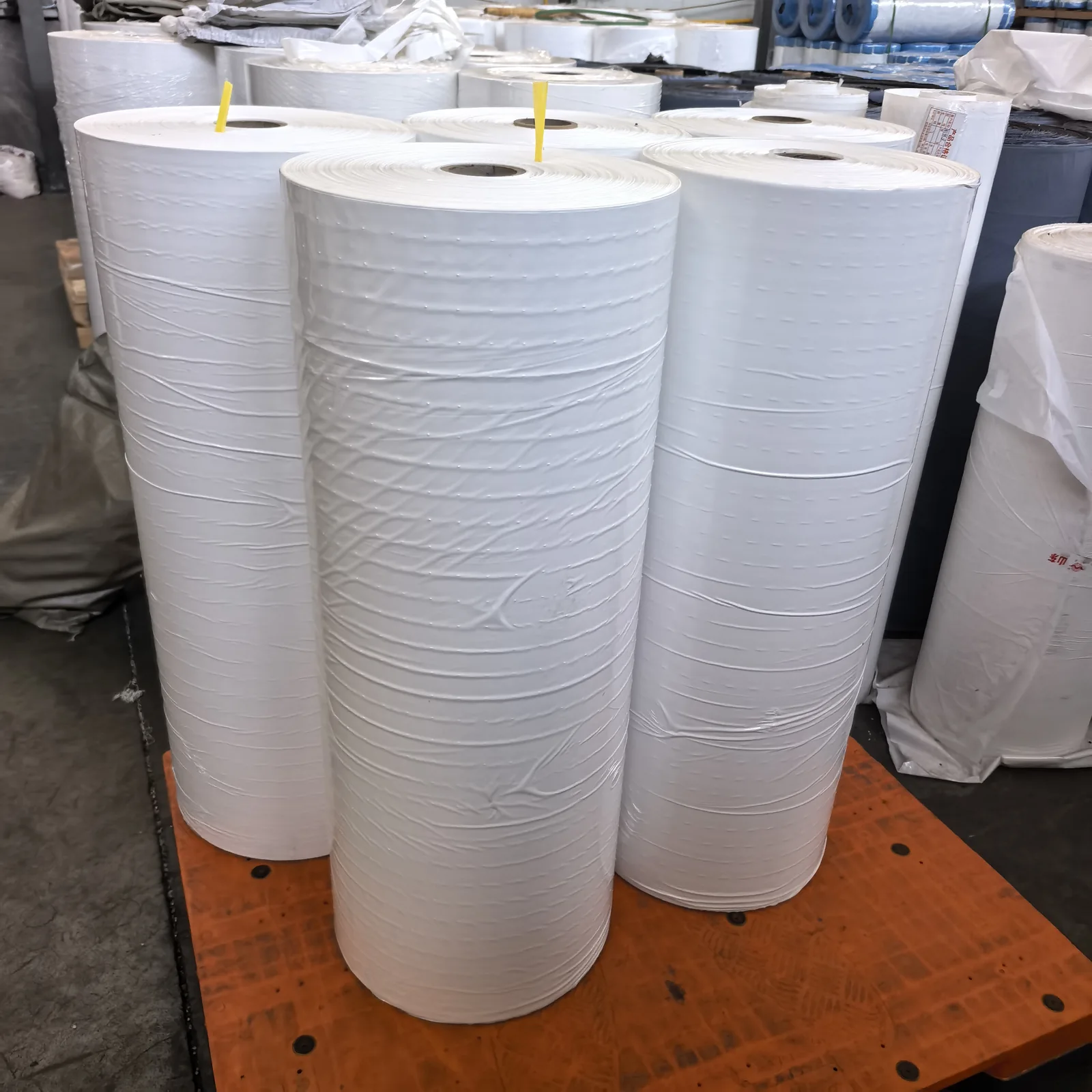
For a uniform specified mat, planning mass in kilograms equals basis weight in g/m² multiplied by width in metres and length in metres, divided by 1000. Use the actual ordered width. As an example, 180 g/m² at 1.01 m wide and 1450 m long is about 263.61 kg of reinforcement before the core and packing.
The familiar 261 kg figure uses 1 m width for the same 180 g/m² and 1450 m length. Both calculations make their width assumption explicit. Do not quote the one-metre result as the exact mass of a 1010 or 1020 mm order.
Agree the order as a complete grade-and-roll package
Common polyester widths are 1010/1020 mm and the target roll diameter is about 1150 mm. The confirmed 200 g/m² length reference is 1230 m. Other grade and length combinations should be agreed rather than generated by an unsupported assumption about roll diameter.
Send Merily the selected basis weight, required properties, width and roll-handling limit. Add the quantity and destination. We can then prepare a quotation whose grade, roll specification and packing reference describe the same purchase.
Questions for This Purchase
Is 130 g/m² in Merily’s polyester reinforcement supply list?
No. It is not in the current continuous-filament polyester range. Do not confuse it with a composite-mat grade.
Can I interpolate performance for 220 g/m² from nearby columns?
Do not publish an interpolated value as a verified requirement. Confirm the selected grade’s own specification.
Does basis weight include the core?
Basis weight describes the sheet material per area. Core and packing must be included separately in shipment weight.
Send your specification.
Get a clear material quote.
Tell us what you produce, the material you need and your required roll format. Include the quantity and destination port so we can prepare the product and packing details together.
Useful details: thickness or basis weight, width, roll length or weight, core, quantity and application. For release film, add coated side and release requirements.
Standard production: approximately 10 days for one 40-ft container order. Customized specifications: approximately 10–15 days. Confirm the schedule with the final order.